During the 2025–2026 academic year, the Spartan Undergraduate Experience Strategy (SUES) Unit, through our collaboration with all our ecosystem partners, strengthened Michigan State University’s institutional commitment to student success through appreciative and growth minded leadership development, systemic problem-solving, and campus-wide engagement.
Grounded in the vision of One MSU for Student Success, the SUES community advanced a shared framework centered on the Five Opportunity Areas of Student Success, while aligning policy, practice, research, and culture to ensure every student can learn, thrive, and graduate.
Student Success Launch, Forum, Summit
Our major student success events are designed to bring the community together with several goals. We want the campus community to:
- understand the shared goals of our work in the five opportunity areas for success,
- collectively influence the major student success initiatives we are engaged in each year,
- highlight the transformative work being done by individual colleges, units, advisors, service providers, and instructors, and
- through shared measurement approaches and tools, research and assess the outcome of our work for students.
Find materials from previous events and information on upcoming events.
Highlights of each event:
Student Success Launch (Fall 2025)
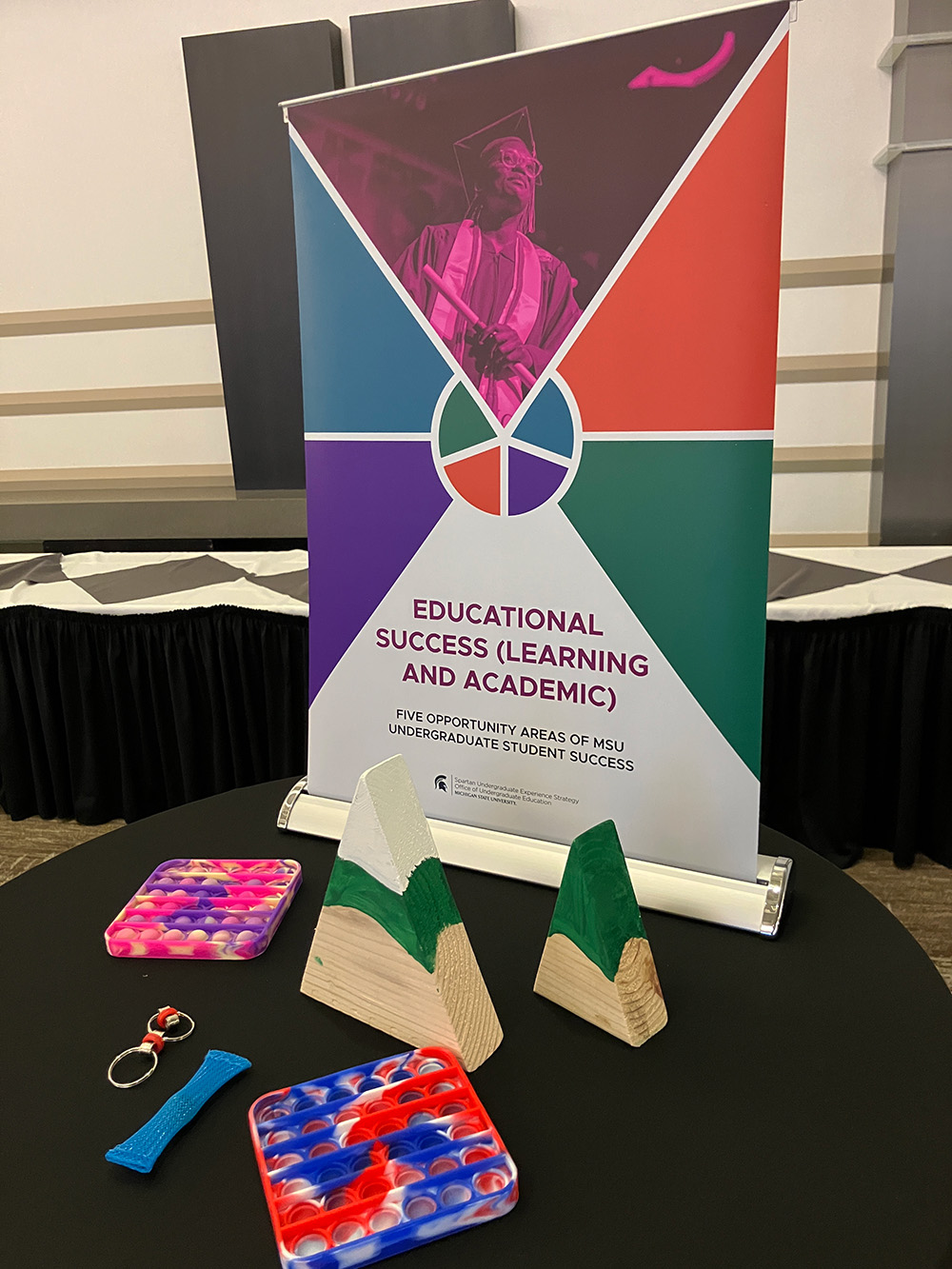
This year we engaged 400+ faculty, staff, and advisors introducing key institutional initiatives for community engagement and input:
- General Education modernization
- MSU Learning Goals redesign
- Academic Standing policy reform
- Transfer student success strategies
- First-Generation Student Success Center development
We also piloted integration of basic needs support efforts into engagement programming at the event. Overall, feedback indicated appreciation for the involvement in decision making and the importance of coming together as a community. Based on feedback, this year we will work to build more opportunities for engagement and discussion among attendees at the 2026 Student Success Launch on Wednesday, Sept. 30, at the Kellogg Conference Center.
Student Success Forum (February 2026)
This year we sponsored the first annual Forum focused on research, metrics, and assessment engaging 90 registrants with cross-functional dialogue on defining and measuring student success. Feedback indicates that we successfully advanced shared understanding of metrics tied to the Five Areas of Success through this effort. Additionally, the feedback from engagement has been incorporated into a framework for measuring the impact of our student success efforts.
Student Success Summit (May 2026)
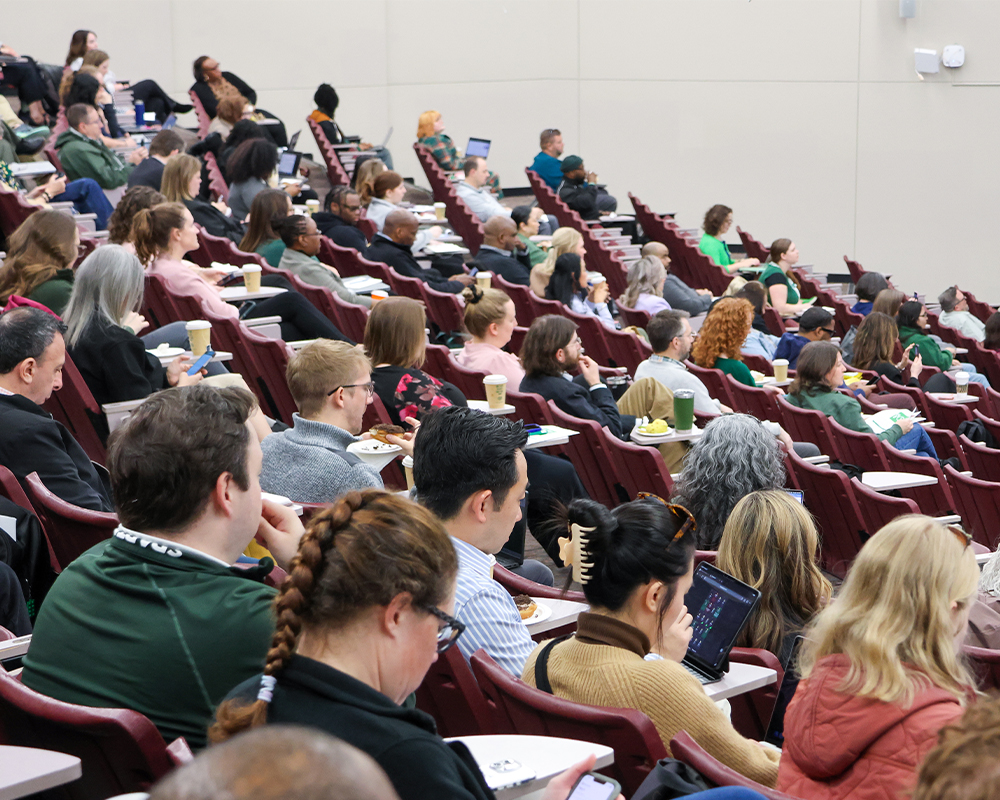
Under the theme for this year: Collective Impact: Empowering Student Success Across One MSU, we convened 265 in-person participants from 349 registrants across campus. Committee member Dr. Qiana Green provided the inspiration and framework for “Practices Worth Replicating” sessions designed to highlight the work of student success nominees for our expanded and integrated awards among Student Success, Center for Teaching and Learning Innovation (CTLI), AT&T Teaching with Technology Awards, Advising and University Health and Well-Being, recognizing cross-campus excellence. Based on feedback received, through the Summit we strengthened a shared culture of collaboration, recognition, and continuous improvement through highlighting the work of campus initiatives, lightning talks, workshops and panels by partners for student success.
Student Success Strategic Initiatives Portfolio
Called together by Mark Largent and Renata Opoczynski, this group meets monthly to connect across initiatives, fueling collaboration and learning while ensuring alignment and fulfillment of the initiative sponsors’ expectations. Project leads identify barriers to progress and bring burning questions to Mark, Renata, and other project leads to problem-solve and strategize.
This year, Wasek Sazzad and Kristina Beatty are working on building a website section to highlight and track the progress and outcomes of student success initiatives across campus. The updates are expected to go live by August 2026.
Learn how different student success projects and initiatives are working together for 51,000 Spartans-including initiative leadership, membership, and purpose across campus-click at the Strategic Student Success Initiatives webpage.
Student Voice and Engagement Spartan Undergrad Experience Advisory Council
Student Voice and Engagement
Over the past several years, the Spartan Voice Pulse Survey, led by Jillian Volpe-White and the Strategic Retention Unit, provides MSU the opportunity to collect student perspectives on a variety of initiatives and around outcomes related to the areas of student success like student belonging. In fall 2025, the surveys asked students about their interest in high-impact practices and their sense of purpose; in spring 2026, the surveys supported committees and working groups on campus focused on general education and course scheduling.
This year SUES expanded integration of student voice in institutional decision-making by adding an internship course (UGS292) that follows the Undergraduate Seminar on the Five Areas of Student Success (UGS201-002) and re-envisioning the Spartan Undergraduate Experience Student Advisory Council (17 members) to focus on feedback for major initiatives and inviting them into meetings such as UGAAD and CSSG. Through pop-up surveys, focus groups, and meetings, we integrated students into: Course Scheduling Reform, Digital Experience Design and Learning Goals Revision. This work enhanced MSU"s ability to design student-centered, evidence-based solutions to systemic problems.
SUES also achieved measurable increases in undergraduate student awareness about the Five Opportunity Areas of Student Success, seeing an increase from 2025 at 28% familiar to 2026 at 46% familiar (RHS Student Experience Survey). Students self-reported that exposure to the five areas occurred through:
- Orientation (61%)
- Fall Welcome (53%)
- Classroom experiences (40%)
Campus Student Success Group (CSSG): Tackling student pain points
CSSG is a cross-campus committee focused on improving the student experience by advocating for change regarding systemic challenges in policies, procedures, and practices—student pain points. Members represent their units and bring forward feedback, co-create solutions, and elevate promising practices. Find the list of CSSG members here. In 2025-2026, CSSG engaged 80+ leaders across academic and student affairs with consistent attendance and engagement of 45+ leaders bi-weekly. Their work contributed to collective understanding of policy, process, and procedure pain points with members learning others’ roles and perspectives through root cause analysis and solution identification. They Identified and developed potential solutions or methods for addressing major pain points in these areas:
- Enrollment holds
- Major change processes – college review and shared with SIS, RO, Academic Standing Project
- Academic standing projects – ASUS policy, early warning, intervention
- Withdrawal and late drop policies
- SUES Complex Problems identification: course scheduling, digital experience, enrollment strategy
Members took initiative to develop tools and resources as the result of the engagement (e.g., international student advising guide, grade postponement guide) and we partnered with SPIRE in the Office of Assessment, Accreditation, Curriculum, and Compliance and the Council on Undergraduate Retention to address policy pain points for students.
Member feedback on their experience expressed: deeper understanding of Academic Standing process leading to changes in how ASUS data is analyzed; gaining information to help with revision and development of processes in their home units and committees; taking information to staff to further clarify their role in supplemental advising; engaging with staff back in their units to improve processes and reduce duplication; breaking down communication silos; increasing understanding the role of academic advisors; and finding common ground across departments and units.
SUES Executive Committee: Solving Wicked Problems
Charged by MSU’s President to embody the “One MSU” vision, the SUES Executive Committee brings together vice presidential level leaders including college deans to tackle systemic institutional challenges through shared operational strategies and unified principles.
This year we advanced a systematic, data-informed approach to addressing complex university-wide challenges. The SUES Executive Committee (30+ senior leaders) identified and began to address systemic barriers advancing work aligned with President Guskiewicz’s charge to address “vexing problems” impacting student success.
Course Scheduling Reform (Discovery Phase Complete)
Key accomplishments of project leads Lynmarie Posey and Annette McLane, and the team:
- Conducted data analysis of course utilization and scheduling patterns
- Engaged students, advisors, and schedulers through surveys and focus groups
- Identified actionable improvements, including:
- Standardizing course scheduling data practices
- Revising time blocks and scheduling patterns
- Increasing transparency and consistency in course offerings
Digital Experience Initiative
Key accomplishments of project leads Jason Beaudin, Carmen Crist, Jeremy Van Hof, and Kristina Baas:
- Initiative and advanced discovery phase with broad stakeholder engagement of students, faculty, and staff.
- Increased D2L gradebook adoption, which went from 33.6% in Fall ‘24 to 49.9% in Fall ‘25
- Similarly, the "active" flag increased from 39.3% in Fall ‘24 to 57.7% in Fall ‘25 , with a similar spike in Spring ‘24 (39.4%) to Spring ‘25 (56.9%) followed by a flattening in Spring ‘26 (57.0%)
- Established infrastructure for a coordinated digital student experience strategy
More information can be found here at the Undergraduate Digital Experience Project webpage.
The SUES Executive Committee’s most recent meeting was designed to begin tackling strategic enrollment efforts with an approach that helps us design One MSU for the students who seek to be Spartans. We will continue that work in the 2026-2027 academic year.
SUES Five Areas of Success Learning Community
SUES deepened its commitment to data-informed student success strategy through the leadership of Maria O’Connell, UIA fellow and Undergraduate Student Success Strategic Initiatives manager; Rebecca Dean, director of Assessment and Data Analytics; and Laleah Fernandez, associate director, Institutional Research and the SUES Five Areas Learning Community, (65 participants). Together they advanced development of shared metrics and assessment frameworks for each of the five areas of success to refine the Spartan Undergraduate Experience Strategy Guide, aligning institutional definitions, commitments, and measures for assessable outcomes. We also expanded research capacity through:
- Pop-up (“street”) surveys for student success initiatives
- Focus group training and implementation
- First-Gen Focus groups led by Maria O’Connell
- Supporting access and information about Institutional Research workshops, workbooks, and research to support the work of key leaders in IR
Council on Undergraduate Retention
Led by Dr. Christina Bridges and Justin St. Charles in 2025-2026 the Undergraduate Retention Council continue their work building on the existing student success ecosystem to establish an institutional commitment to retention efforts. The council is inclusive of every undergraduate degree granting college, and representatives from Enrollment Services, Controllers Office, Student Affairs, Institutional Research, and Undergraduate Education. The work of the council demonstrates the capacity of our institution to address barriers to student success across a large and decentralized campus. Their collaboration builds on the work of the existing retention and student success ecosystem by bringing together colleagues from across MSU to advance data-informed strategies, broaden participation in retention efforts (e.g., persistence campaigns, pulse surveys), and ensure that all students have equitable institutional support by functioning as One MSU.
Being informed through an institutional-deficit lens, supporting our students requires a collaborative, institution-wide effort, and the retention unit and Council of Undergraduate Retention have been actively addressing unjust barriers to student success. Examples include advocating for the removal of the late enrollment fee, raising the threshold of disenrollment for non-payment (resulting in a reduction from 400 students to be disenrolled to 80), creating a centralized application for emergency and retention grants making it more visible to all students not just those familiar with campus processes, and creating equity in the distribution of funds by supplementing college funding sources so all students can be eligible for support independent of their college funding opportunities.
While this work is championed through the positions of our Strategic Retention Managers, the work of CUR, bringing people together outside of their daily individual unit processes to work together creates a layer of engagement new to the MSU community. This requires attending to individual leaders’ needs and perspectives, college needs and perspectives and other units’ needs and perspectives. This human-centered design work can often lead to after-hour discussions or veering away from scheduled work to address questions and concerns. As CUR changes the institution for our students, they also create a growth minded and collaborative culture for staff and faculty at MSU. This isn’t always efficient but can be effective in creating the change needed.
Stay informed about Student Success at MSU
As part of our broader effort to foster transparency, collaboration, and innovation across MSU for the Spartan Undergraduate Experience, we will continue to provide important updates from the meetings, conversations and engagement opportunities with the campus community. Explore more Student Success News to stay informed and join the conversation as we work together to build a more student-centered MSU.