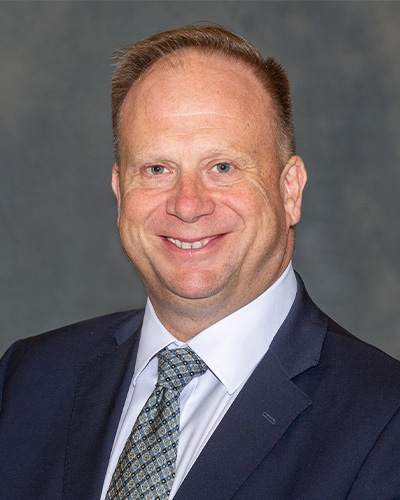
This is my last article for the Student Success Newsletter. For eight years, I have written this column nearly every month—about 80 essays—and although I knew this one was coming, it is still strange to type that first sentence.
I took some time to look over those many articles this week and was happy to see a sustained argument, examined from many angles: every student MSU admits has the capacity to learn, thrive, and graduate, and it is our responsibility to build an institution in which they can do so.
That idea sounds simple, but we know its implications are not. It requires us to move away from the student-deficit model that continues to dominate much of higher education. Instead of asking whether a student is sufficiently prepared, motivated, resilient, or willing to seek help, we have learned to ask a harder and more productive question: Is MSU prepared to meet each of its students’ needs?
The shift from locating deficits in students to identifying deficits in our systems has been the foundation of our approach to student success. It has helped us move from seeing MSU as a sorting institution toward becoming a catalyzing institution. Admission alone is not access; our land-grant promise is realized only when students from every background have a genuine opportunity to succeed.
Many of these columns have focused on what that shift looks like in practice. We have used disaggregated data not to label students, but to locate institutional barriers. We examined where and when students lost momentum and reconsidered the policies, courses, and support systems that hindered them. We promoted credit momentum and moved to flat-rate tuition. We redesigned gateway mathematics, eliminated remedial algebra, and created more appropriate quantitative literacy pathways. We reformed retake, credit/no-credit, and withdrawal policies and began redesigning academic-standing practices. We strengthened advising, built proactive retention efforts, created the Spartan One-Stop and the soon-to-be-opened Spartan Success Center, and improved the systems through which students receive academic and financial information.
We also broadened our understanding of what success requires. A graduation rate matters, but it is not the whole story. Students must be able to discover their purposes and passions, experience educational success, develop a sense of belonging, contribute to an empowered community, and build well-being. I once wrote that, as a faculty member, I had the causal arrow backward: I assumed students felt they belonged because they engaged and succeeded. Our work taught me that students are more likely to engage and succeed when they first feel valued, included, and accepted.
The same lesson changed how we thought about support. Saying “my door is always open” is not enough. An open door still requires students to recognize that they need help, know where to go, and take the risk of walking through it. A student-centered institution reaches out. It notices. It listens. It makes support timely, proactive, coordinated, and easier to navigate. It recognizes that transfer students, first-generation students, veterans, students from historically underserved communities, and students still exploring their direction may encounter different barriers. But it does not mistake those differences for deficits.
Another theme has appeared almost as often as institutional responsibility: none of this work can be done alone. Student success does not belong to one office, one vice provost, one strategic plan, or one initiative. It is the work of an ecosystem. Over time, we have become more deliberate about creating One MSU for students by connecting faculty and advisors, colleges and central offices, academic and student affairs, data and technology teams, health and well-being professionals, community partners, and students themselves.
Renata Opoczynski gave us one of the most useful metaphors for this work. To move a mountain, she reminded us, we must agree on the mountain, agree on where it needs to go, and empower everyone to move one rock. Together, we have moved a great many rocks. We have improved retention and graduation, reduced time to degree, narrowed opportunity gaps, created new pathways for transfer and first-generation students, and built structures that make coordinated work more likely to endure. Just as important, we have changed the questions people across MSU ask when a student encounters an obstacle.
We did this work through a pandemic, the tragedy of Feb. 13, 2023, repeated leadership transitions, and profound uncertainty. Those experiences reinforced a recurring lesson: care, belonging, community, and resilience are not extras. They are conditions for learning and thriving.
I am deeply grateful to everyone who made our progress possible: the faculty members who redesigned courses and reconsidered long-held practices; the advisors who guided students through moments of uncertainty; the staff members who rebuilt policies and systems; the analysts who helped us see patterns we had missed; the leaders who invested attention, resources, and political capital; and the students who trusted us enough to tell us where MSU was not yet meeting their needs. I have tried in this space to celebrate not only prestigious accomplishments, but also the ordinary, admirable acts of teaching, advising, mentoring, and care that change students’ lives. I am grateful to everyone who read these articles, challenged an assumption, shared an example, or carried an idea into another meeting.
We should be proud of what we have accomplished, but we should not confuse progress with completion. There will always be another transition to improve, another opaque policy to clarify, another “papercut” to remove, another wicked problem that no single mind or unit can solve. The students will continue to change, and MSU must continue to change with them.
This is my last column, but it is not our last word on student success at Michigan State. Please keep asking what the institution must do differently. Keep listening to students. Keep using evidence with humility. Keep aligning good people around clearly defined problems. And keep moving rocks.
Thank you for letting me help move the mountain with you.