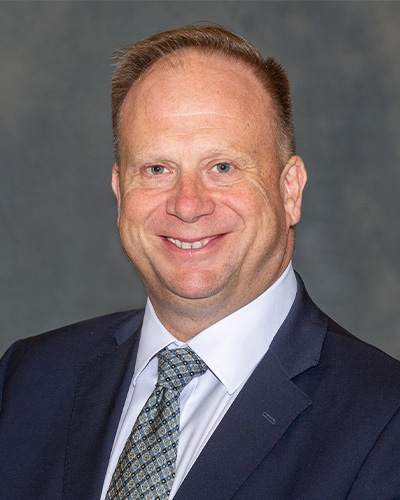
Kevin Guskiewicz has made a profound impact on MSU during the slightly more than two years that he has served as president. From my perspective as Vice Provost and Dean of Undergraduate Education, one of the most meaningful aspects of his presidency has been his unwavering advocacy for student success. At a moment when higher education faces enormous pressures and competing priorities, President Guskiewicz consistently and clearly communicated that supporting students is not ancillary to the university’s mission. It is the mission.
President Guskiewicz understands that student success is a shared institutional responsibility. Too often in higher education, student outcomes are framed through a student deficit model, and challenges to a student’s success are explained as shortcomings of individual students. President Guskiewicz embraced a fundamentally different perspective, one that asked institutions to examine their own structures, systems, and practices to remove barriers to students’ success. His support for MSU’s institution deficit approach empowered leaders across campus to think more boldly about what it means to create environments in which all students can thrive.
President Guskiewicz’s advocacy mattered not only symbolically, but operationally. Student success work requires sustained institutional commitment because the work itself is difficult, long-term, and deeply collaborative. He demonstrated a remarkable willingness to invest his time, attention, and political capital into these efforts. Whether in conversations with faculty, trustees, donors, legislators, or students themselves, he consistently elevated the importance of undergraduate education and the centrality of student belonging, persistence, and achievement to MSU’s future.
Importantly, President Guskiewicz’s leadership reinforced that excellence and equity are inseparable. He understands that a great public research university must simultaneously pursue world-class scholarship and ensure that students from every background have genuine opportunities to succeed. That message resonated across our campus because it reflected both aspiration and accountability. It challenged us to measure success not only by who we admit, but by who graduates, who flourishes, and who feels that they truly belong at Michigan State University.
I have also appreciated President Guskiewicz’s collaborative style. Effective student success work cannot emerge from isolated offices or siloed initiatives. It requires trust, alignment, and a culture where people feel empowered to innovate. President Guskiewicz fostered precisely that kind of environment. He listened carefully, asked thoughtful questions, and encouraged evidence-based decision making while never losing sight of the human dimension of our work. His support allowed many of us to pursue ambitious reforms with confidence that this work is understood and valued at the highest levels of the institution.
Perhaps most importantly, students recognized his commitment. They saw a president who cared deeply about their experience and who believed in their potential. At a time when students often question whether large institutions truly know or value them, President Guskiewicz’s authentic engagement sends a powerful message about what kind of university that Michigan State aspires to be.
Leadership in higher education is often evaluated through moments of crisis or major public milestones. But lasting institutional transformation frequently occurs through sustained attention to the daily work of helping students succeed. President Guskiewicz made that work a defining priority of his presidency. Michigan State University and its students are better for it.
Thank you, Kevin.