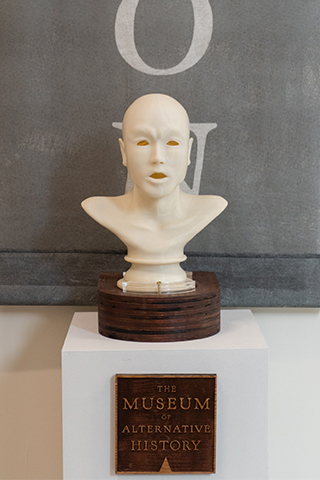
The Michigan State University Museum was reborn after its first major renovation in more than 75 years. The renovation transformed the museum into a flexible and engaging learning environment for students and learners from all walks of life. For Stephanie Palagyi, director of marketing and communications for the MSU Museum, the reopening was not only professional but also deeply personal to her.
“The MSU Museum has long been a place where curiosity, creativity, and collaboration intersect,” Palagyi said. “Seeing it come back to life feels both exciting and rewarding.”
Palagyi highlighted how special the reopening was to her by emphasizing how the museum represented all of the years of hard work from students, museum staff, faculty and community partners who helped recreate a newly renovated center of learning in the heart of Michigan State's campus.
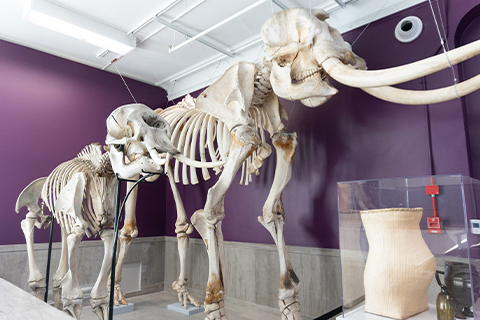
The museum looked to the future through its renovations by adopting and embracing new technologies and flexible teaching spaces. This was not an average renovation, but a transformation that focused on aligning the museum with contemporary and interactive learning styles.
“This moment felt right because the renovation allowed us to align the museum with how students and communities learn and engage today,” Palagyi said.
Exhibits in the museum became interactive and encouraged people to engage with their thoughts and ideas instead of just observing. The museum prioritized conversation, interaction and participation, which challenged visitors to learn and think for themselves.
“Our exhibitions are more interactive and interdisciplinary,” Palagyi said. “They’re often developed in collaboration with students, faculty, artists and community partners.”
A highlight of the museum, the Blurred Realities exhibit, dived into misinformation, artificial intelligence and various perceptions of truth. The exhibit encouraged visitors to critically think about how this new technology affected the way our perceptions of truth and reality were shaped and challenged in the modern digital age.
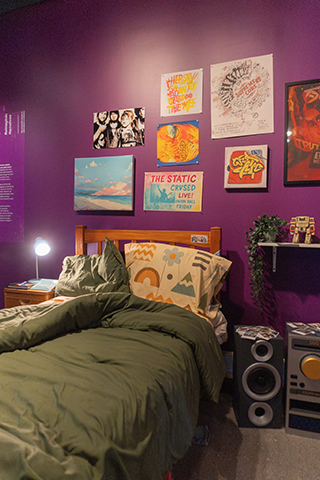
“Many students are surprised by Blurred Realities,” Palagyi said. “It asks visitors to actively engage with complex contemporary issues rather than passively observe.”
The Blurred Realities was a unique exhibit that Palagyi said she was especially proud of. This exhibit included multiple works from artists and researchers from all around the world, which were all selected from an open call that drew hundreds of proposals. By combining these elements, these artists and researchers helped visitors think more freely about how people interpret visual media and digital content in a world where artificial intelligence was increasingly shaping viewpoints.
Palagyi hoped students could see the museum as a space they could call their own, rather than a distant institution.
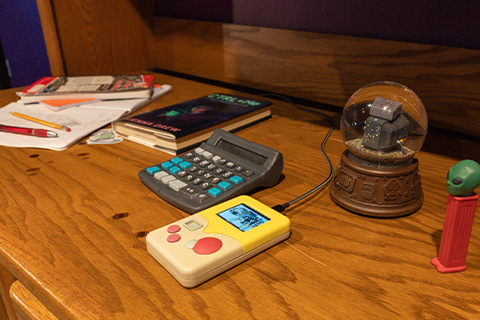
“I hope students feel a sense of ownership and possibility,” Palagyi said. “I want them to see the museum as a place where their ideas, research, creativity and questions belong.”
Palagyi saw the newly improved museum as an innovative information hub that would continue to grow and evolve right alongside future generations of Spartans. The museum planned on expanding student-centered programming and interdisciplinary projects that connected sciences, cultures, arts and technologies moving forward.
“The renovated museum sets the stage for decades of learning, discovery and collaboration,” Palagyi said. “I’m excited to see how future generations help shape what comes next.”
As doors reopened and students once again walked through its galleries, the MSU Museum stood not just as a place to view history, but as a living space for ideas, dialogue and discovery.
Photography by Sidney Cummins